
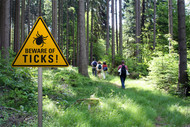
Tick Season Is Here: What Turkey Hunters Need to Know Before Heading Into the Woods
27th Apr 2026
Spring turkey season puts hunters right where they want to be: tucked against trees, moving along field edges, sitting near logging roads, and working birds in thick cover. Unfortunately, that also puts hunters right where ticks want them.
The latest tick news is worth paying attention to. On April 23, 2026, the CDC reported that emergency room visits for tick bites are higher than normal in much of the country. In every U.S. region except the South Central region, weekly ER visits for tick bites are the highest for this time of year since 2017. The CDC is urging people to take tick prevention seriously now, before activity peaks even more later in the season.
That warning matters even more for hunters in Pennsylvania. The Pennsylvania Department of Health notes that ticks can be found in long grass, weeds, leaf piles, wooded areas, and even backyards, and that Pennsylvania ticks can carry several diseases, including Lyme disease, anaplasmosis, babesiosis, ehrlichiosis, spotted fever rickettsiosis, Powassan virus, and alpha-gal syndrome.
Latest Concern: The Lone Star Tick and Alpha-Gal Syndrome
One tick getting more attention right now is the lone star tick, especially because of its link to alpha-gal syndrome, sometimes called the “red meat allergy.” The CDC says alpha-gal syndrome is a potentially serious, even life-threatening allergic condition that can develop after a tick bite. People with alpha-gal may react after eating red meat such as beef, pork, lamb, venison, or rabbit, and some may also react to dairy, medications, or other mammal-derived products.
That matters for hunters because the CDC specifically notes that hunters are at heightened risk. Turkey hunters spend hours in thick grass, dense woods, leaf litter, and low-to-the-ground setups — exactly the kind of exposure that increases tick contact.
The lone star tick is also becoming a bigger conversation because it is widely distributed across the Northeast, South, and Midwest, and the CDC describes it as a very aggressive tick that bites humans. Adult female lone star ticks are often identified by the white dot, or “lone star,” on their backs.
Recent reporting and expert commentary are also pointing to lone star ticks moving farther into northern areas. Yale News recently noted that the lone star tick has moved up from the South into New England and is associated with several diseases, including alpha-gal syndrome.
For turkey hunters, this is especially important because alpha-gal can be easy to overlook at first. Unlike some tickborne illnesses that may cause symptoms soon after a bite, alpha-gal reactions often happen later after eating red meat or being exposed to mammal-based products. That means a hunter could get bitten during spring season and not immediately connect later allergic reactions to the tick bite.
Bottom line: deer ticks and Lyme disease still get most of the attention, but hunters should also be thinking about lone star ticks. Preventing tick bites is the best protection, especially for anyone spending long sits in turkey woods, field edges, and brushy cover.
Why Turkey Hunters Are at Higher Risk
Turkey hunting is not like walking a clean hiking trail. Hunters often sit directly on the ground, lean against trees, crawl or kneel in leaf litter, move through brush, and spend long hours along field edges and wooded openings. Those are prime tick areas.
Spring gobbler season also lines up with increasing tick activity. In Pennsylvania, the 2026 spring turkey season opens statewide May 2 and runs through May 30, with hunting hours expanding later in the season. That means hunters will be spending more time in tick habitat during one of the most important windows for prevention.
Ticks are not just a nuisance. They can spread serious illnesses, and Lyme disease remains the most common tickborne disease in the United States. The CDC estimates that about 476,000 people are treated for Lyme disease each year.
How to Protect Yourself Before the Hunt
The best defense starts before you ever leave the truck.
Treat your hunting clothing and gear with 0.5% permethrin or buy clothing that is already permethrin-treated. The CDC recommends permethrin for boots, clothing, and gear, and notes that it can remain protective through several washings when used properly. This is especially useful for turkey hunters because ticks often start low and crawl upward from boots, pant legs, knee pads, vests, and seat cushions.
Use an EPA-registered insect repellent on exposed skin. The CDC lists active ingredients such as DEET, picaridin, IR3535, oil of lemon eucalyptus, para-menthane-diol, and 2-undecanone as options for tick prevention. Always follow the product label.
Dress with ticks in mind. Long sleeves, long pants, gaiters, and tucked-in layers can help reduce easy access to skin. For hunters, full light-colored clothing may not always be realistic in the turkey woods, but checking lighter base layers, socks, and underlayers after the hunt can make spotting ticks easier.
Smart Habits While You’re Hunting
When setting up on a bird, try to avoid sitting directly in heavy leaf litter, tall grass, or thick brush when possible. A small seat pad, turkey vest cushion, or ground seat can create a barrier between you and the ground.
Be extra careful around field edges, logging roads, brushy transitions, creek bottoms, and overgrown trails. Those are great places to find gobblers, but they are also places where ticks are waiting on vegetation for a host to brush by.
Do quick tick checks during long sits. Check your pant legs, sleeves, gloves, vest, and seat cushion. Ticks often crawl around before attaching, so catching them early can make a big difference.
What to Do After the Hunt
The hunt is not over when you leave the woods. Your post-hunt routine matters.
Before getting in the house, check your clothes, boots, vest, turkey seat, backpack, calls, and any gear that touched the ground. Ticks can ride in on clothing and gear and attach later. The CDC recommends examining gear and pets after time outdoors.
Put hunting clothes in the dryer on high heat for 10 minutes if they are dry. If they are damp, they may need more time. The CDC says high heat can kill ticks on dry clothing, while cold and medium-temperature washing will not.
Shower soon after getting home. The CDC says showering within two hours of coming indoors has been shown to reduce Lyme disease risk and gives you a good chance to find ticks before they stay attached too long.
Do a full-body tick check. Pay close attention to the areas ticks like most: under the arms, in and around the ears, inside the belly button, behind the knees, around the hairline, between the legs, and around the waist.
If You Find a Tick
Do not panic, and do not wait.
The CDC recommends removing an attached tick as soon as possible with clean, fine-tipped tweezers. Grab the tick as close to the skin as possible and pull upward with steady, even pressure. Do not twist, jerk, burn, smother, or cover the tick with petroleum jelly or nail polish. After removal, clean the bite area and your hands with soap and water, rubbing alcohol, or hand sanitizer.
If you develop a rash, fever, chills, fatigue, headache, muscle aches, joint pain, or flu-like symptoms in the days or weeks after a tick bite, contact a healthcare provider and tell them you were bitten by a tick or recently spent time in tick habitat. The CDC specifically recommends seeking medical care if a rash or fever develops after a bite or after being in an area with ticks.
Bottom Line for Turkey Hunters
Turkey season is one of the best times of year to be in the woods, but this spring’s tick activity is already raising concern. A few simple habits can go a long way: treat your clothing, use repellent, check yourself and your gear, shower after the hunt, and remove ticks quickly.
The gobbler may be the reason you’re heading into the woods, but ticks are the thing you need to be ready for every time you step out.